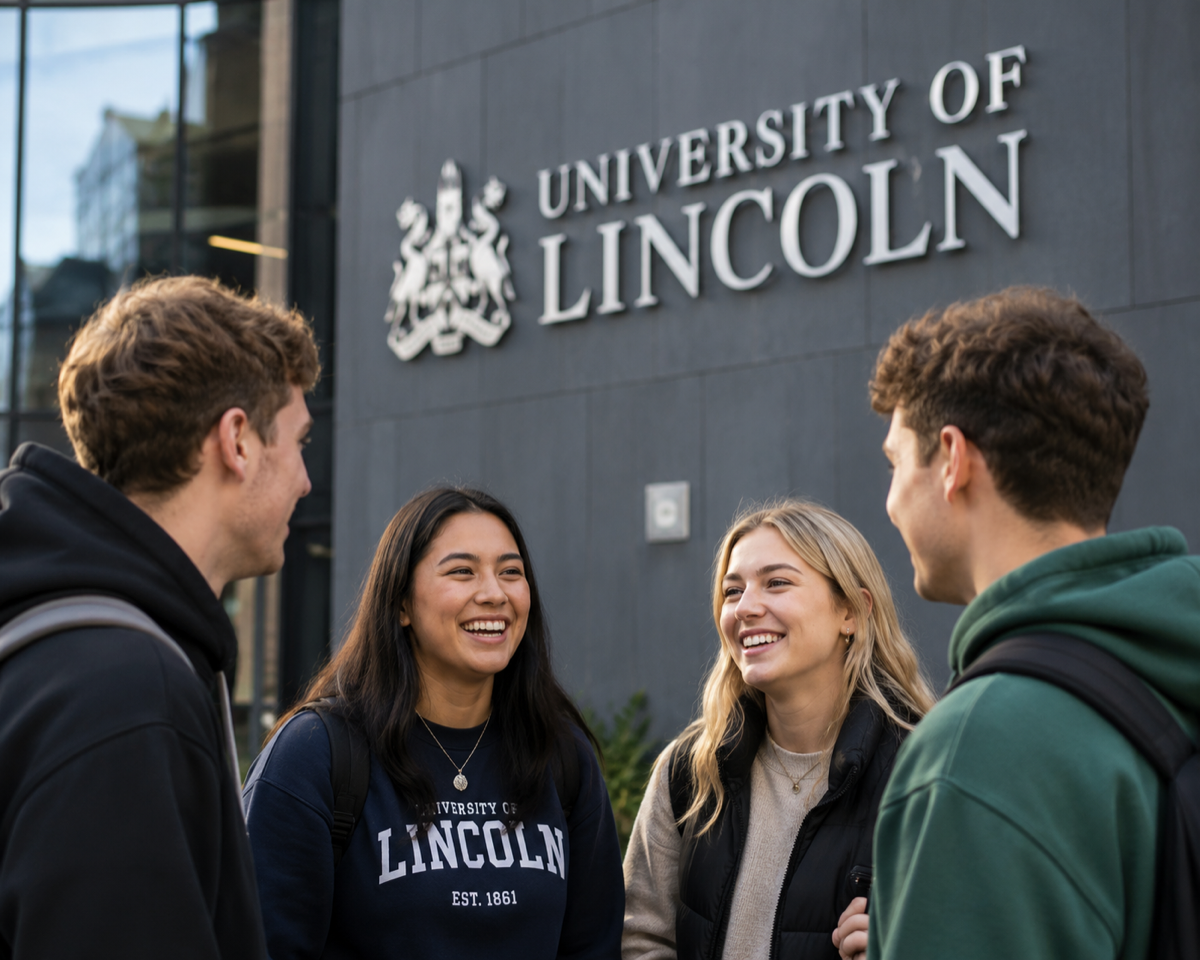
BSc Physics with Science Foundation Year
About this course
Physics is the fundamental science, concerned with understanding the basic laws that govern the behaviour of matter, energy, space, and time. From quantum mechanics and particle physics to thermodynamics, electromagnetism, and cosmology, physics provides the conceptual and mathematical framework that underpins all the natural sciences and most of modern technology. Studying physics at degree level means developing not just specific knowledge but a particular way of thinking: rigorous, quantitative, and creative in the face of genuinely hard problems. At the University of Lincoln this programme, studied part-time and including a science foundation year, allows you to develop your physics knowledge at a pace that fits around other commitments. The foundation year is designed to build the mathematical and scientific foundations needed to engage fully with degree-level physics content. The programme is housed in purpose-built facilities in the university's Isaac Newton Building, alongside engineering courses that create an environment shaped by quantitative scientific thinking. The course includes a sandwich placement year and a work placement component, giving you structured professional experience in physics, engineering, or related scientific contexts during your studies. You will develop mathematical rigour, analytical problem-solving skills, laboratory competence, and the quantitative reasoning that makes physics graduates genuinely versatile across a wide range of technical and non-technical careers. Graduates of physics programmes go on to work in engineering, data science, finance, healthcare physics, the civil service, education, research, and a wide range of technology-intensive industries. Postgraduate study in physics, engineering, computational science, or a related quantitative field is a natural continuation for those wanting to develop specialist expertise.
Syllabus & Modules
Typical curriculumStudent Satisfaction
Missing Satisfaction Data
The university has not shared complete student satisfaction records for this specific degree metrics block. You may want to formally explore these topics with the university staff at an open day before committing.
What comes next? 🎓
Choosing the right university starts with choosing the right school. Explore transparent, data-driven school profiles powered by official DfE statistics.
Explore Schools on WhatSchool.ai →